at a glance
what makes Wordbrush different
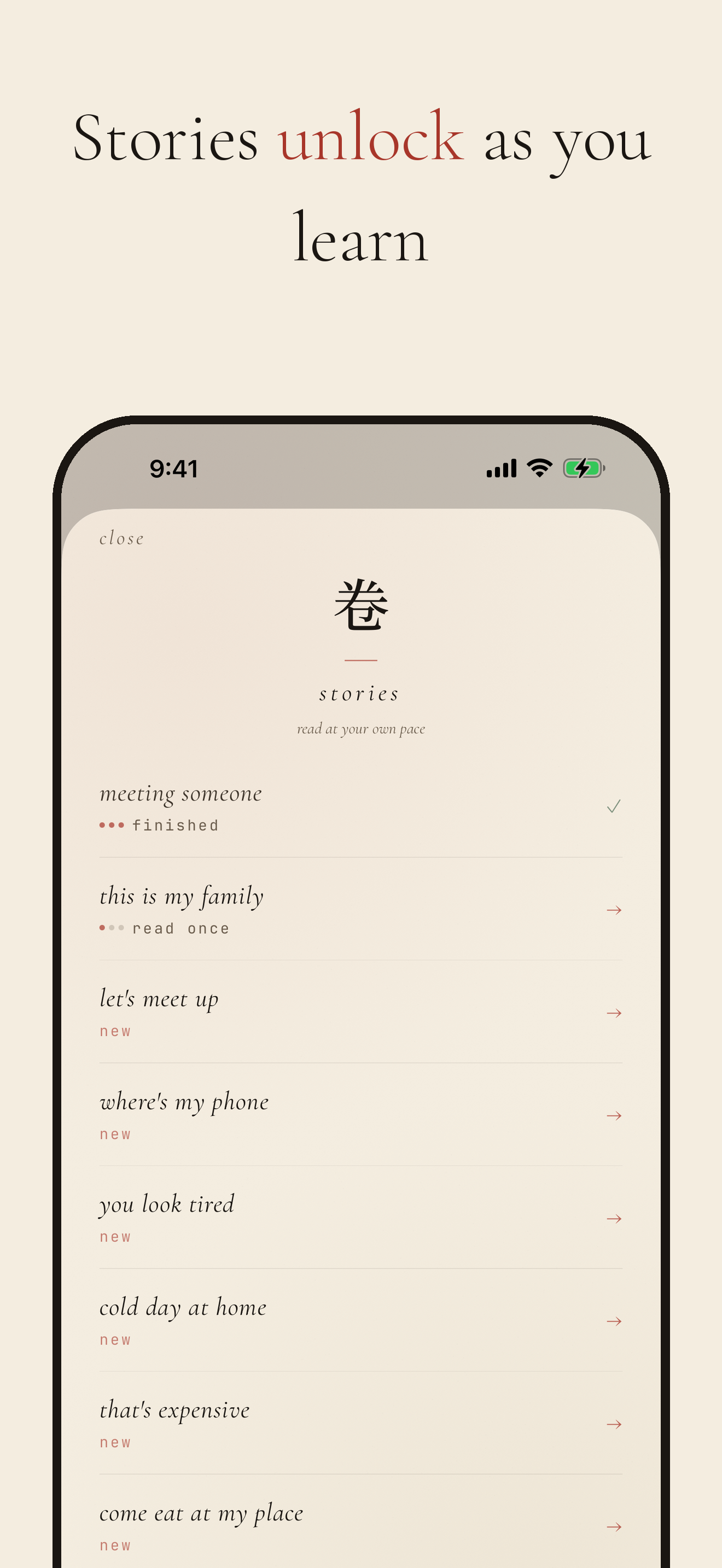
Frequency-ordered, not textbook-ordered. Other Chinese apps teach the words in their own textbook order. Wordbrush drills the 2,199 HSK 1-3 words in actual frequency-of-use order, the order you'd encounter them on the street. HSK levels unlock bottom up: HSK 2 doesn't start until HSK 1 is complete; HSK 3 waits on HSK 2. The user reaches conversational competence in the shortest possible vocabulary distance.
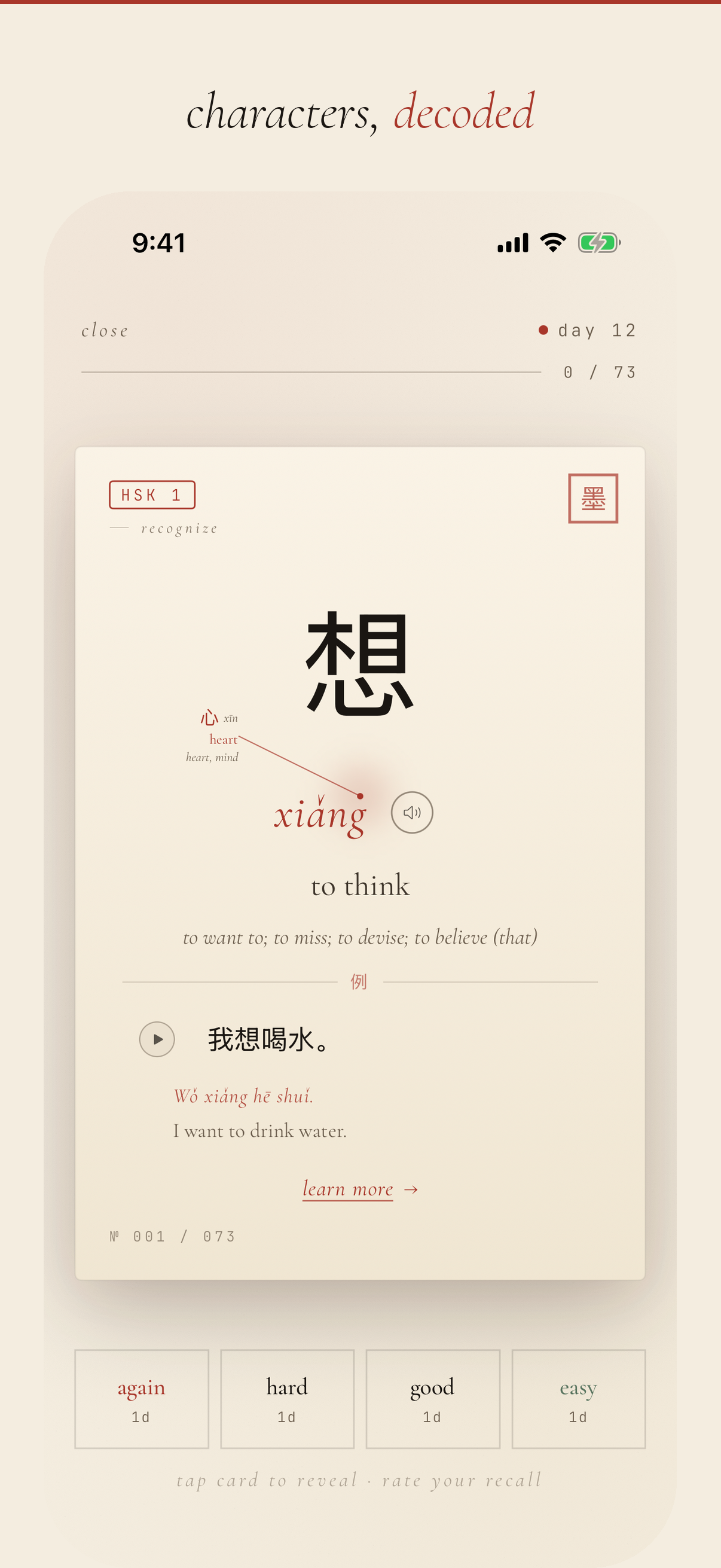
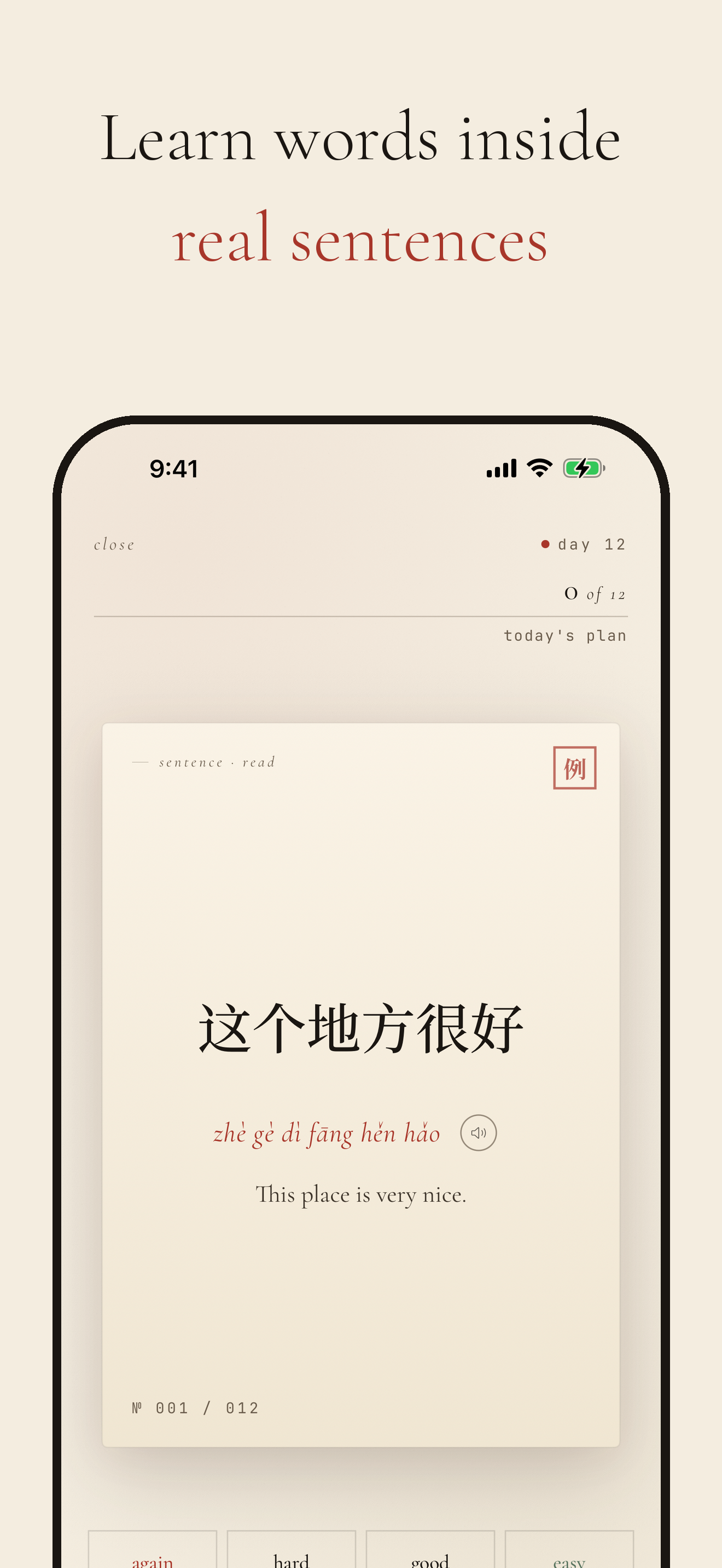
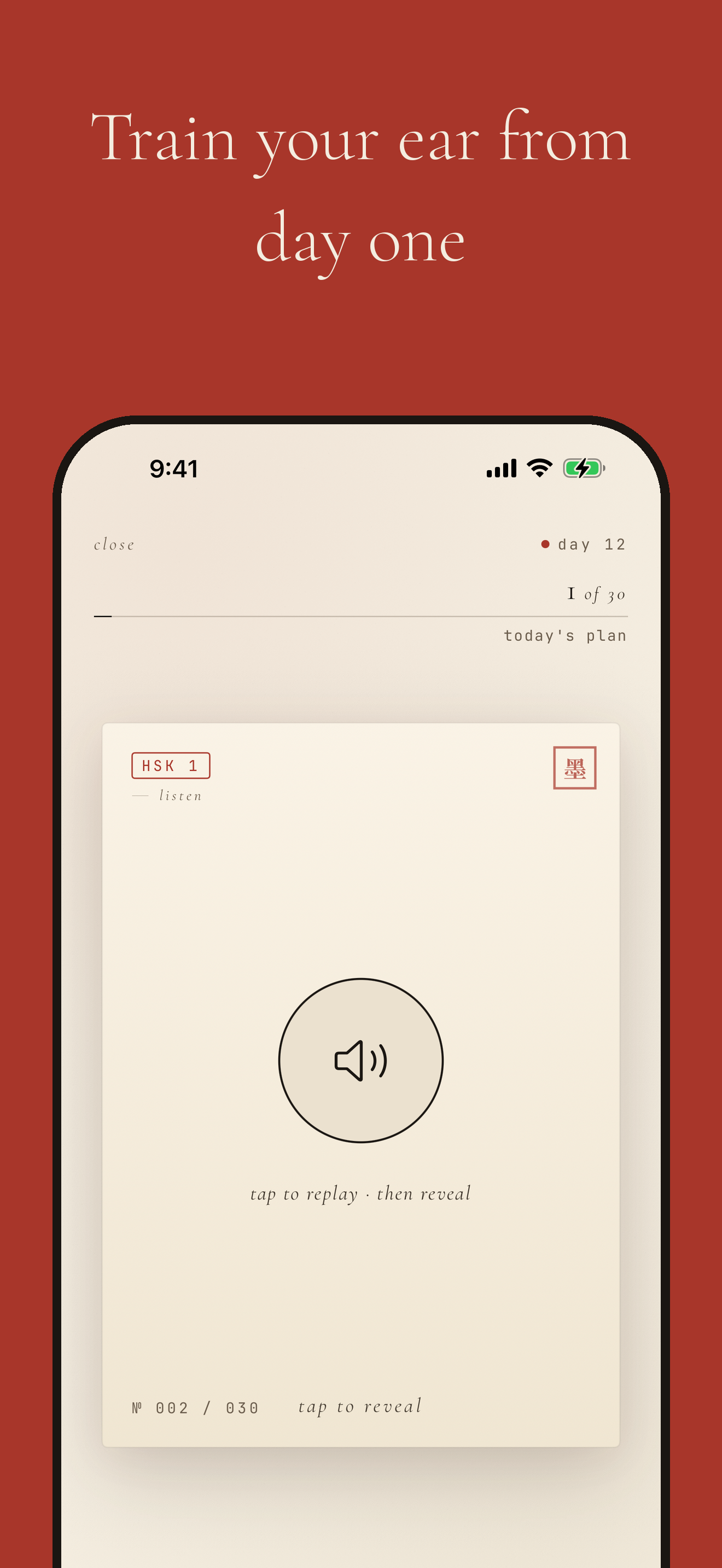
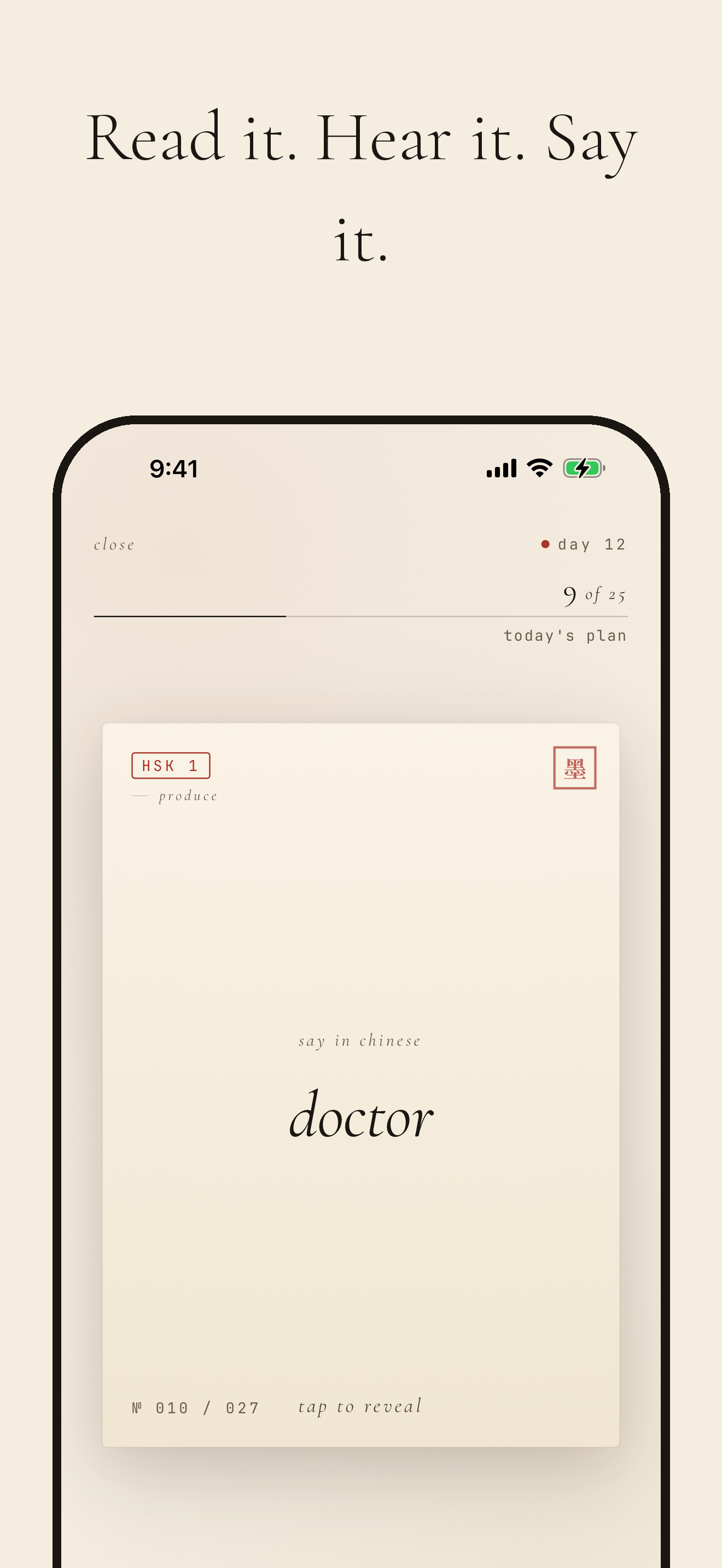
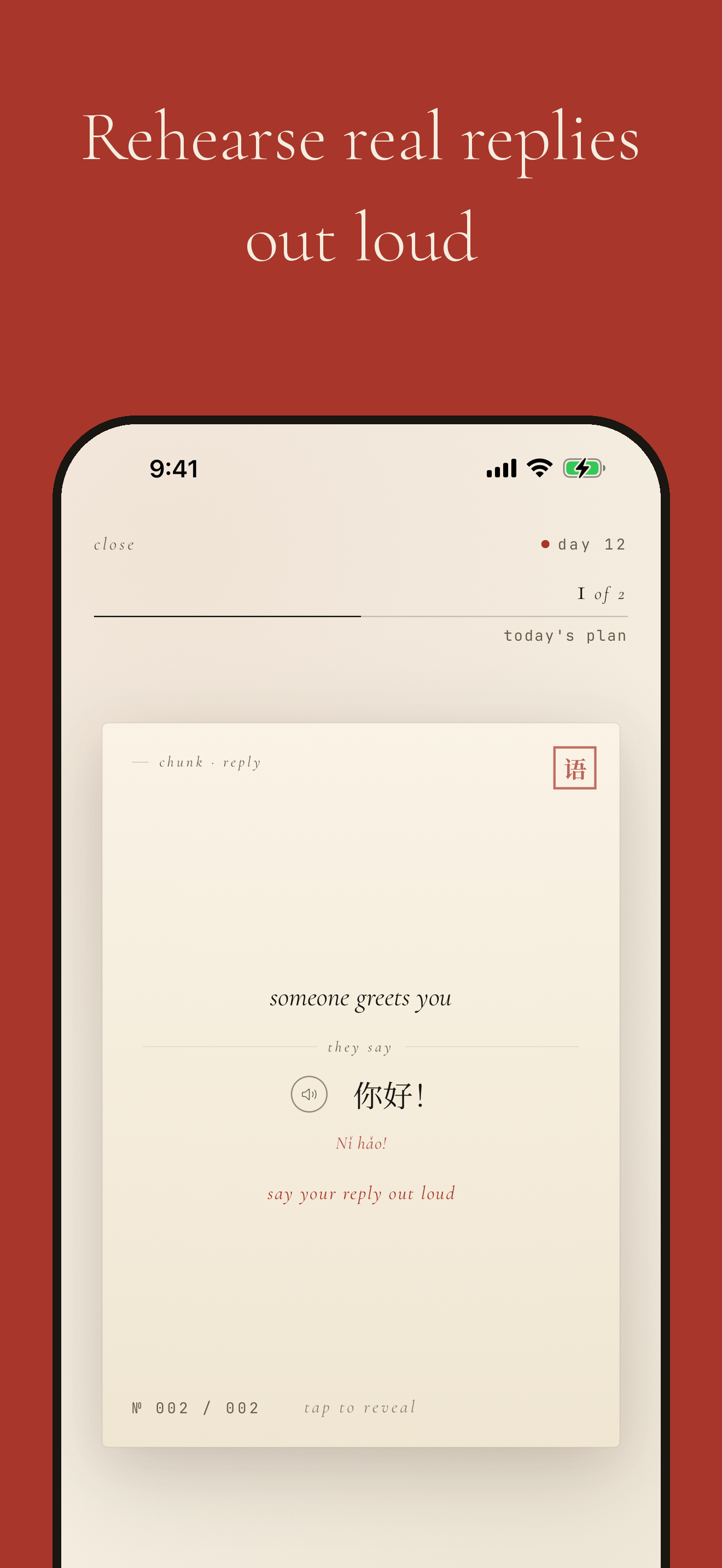
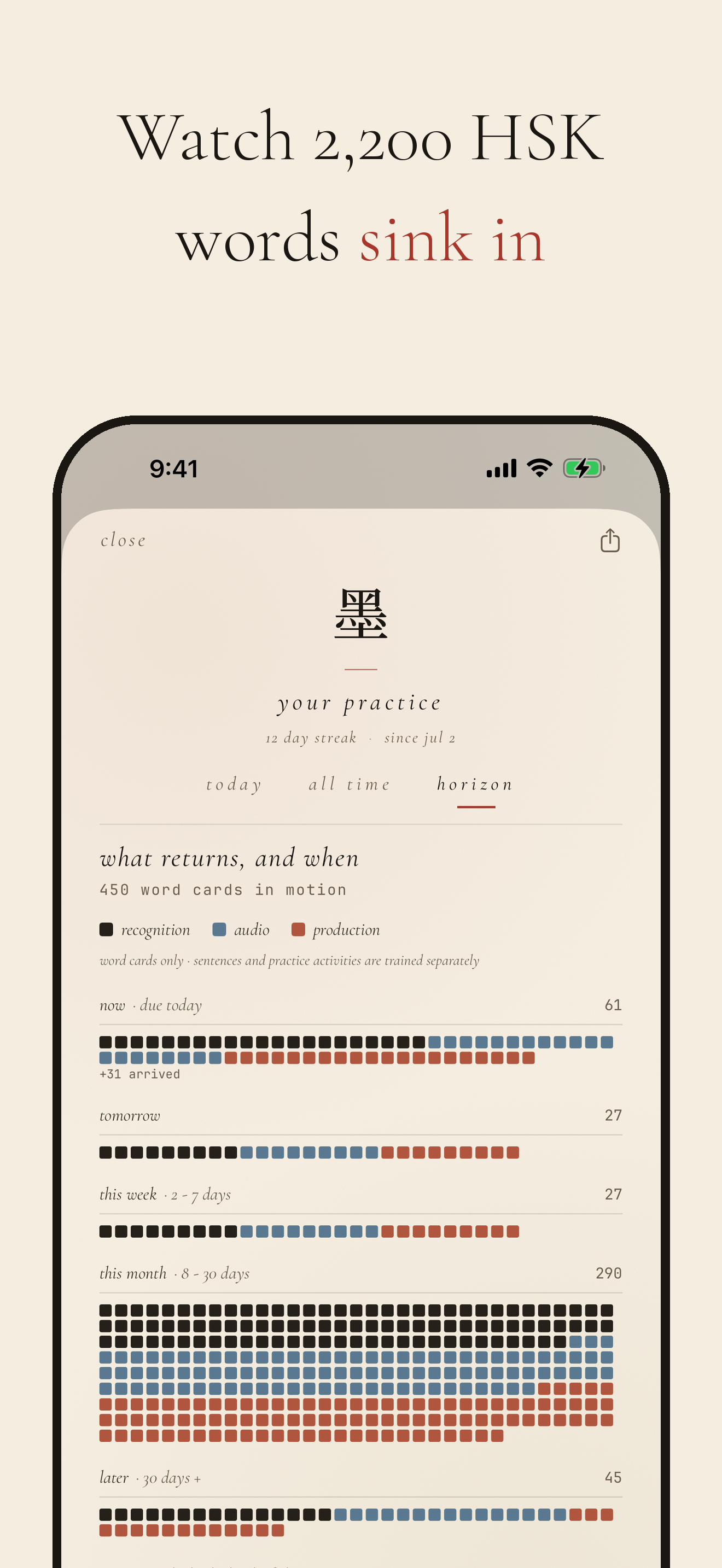
Every word from several angles. Recognition (see the character, recall the meaning), listening (hear the audio, recall the character), production (see English, produce pinyin + tones). The same word cycles through all three across days. The same hanzi seen as a glyph and heard as a sound becomes a different word in the brain; Wordbrush exercises both pathways and the productive recall pathway that learners typically neglect. Alongside those, fill-in-the-blank sentence cards and conversational reply cards put the word back into use, and an optional writing card asks for the character from memory on a blank pad, stroke-graded as you go. Writing is off unless the user turns it on, and it is deliberately bounded to 606 words: the core characters and the ones that look alike, because telling similar characters apart in reading is what writing from memory actually buys you.
Character components annotated. Tap-reveal on any card shows the constituent radicals, with the meaningful ones highlighted in vermilion (e.g., the heart radical 心 in 想, "to think"). This isn't just decoration. Once you see 心 in 想, 念, 愛, 急, 恐, 患, you stop memorizing characters as flat shapes and start reading them as ideographic compounds.
Clear Mandarin audio, twice per word. Every word ships with two clips: the word itself, and the word inside a curated example sentence (e.g., "我想喝水", "I want to drink water"). Both are generated by the same voice (Google Chirp 3 HD), curated to use only words at or below the current HSK level. The user hears the target word, then immediately hears it doing real work.
FSRS v6 with personalised weights. The spaced repetition algorithm is Free Spaced Repetition Scheduler, the same Anki-derived schedule used by serious learners worldwide, with the optimisation loop that re-fits the user's personal forgetting curve from their own review history. After ~50 reviews, the app's cadence is tuned to that user; after ~500 reviews, the 21-weight FSRS parameter vector is itself re-fitted to that user's data.
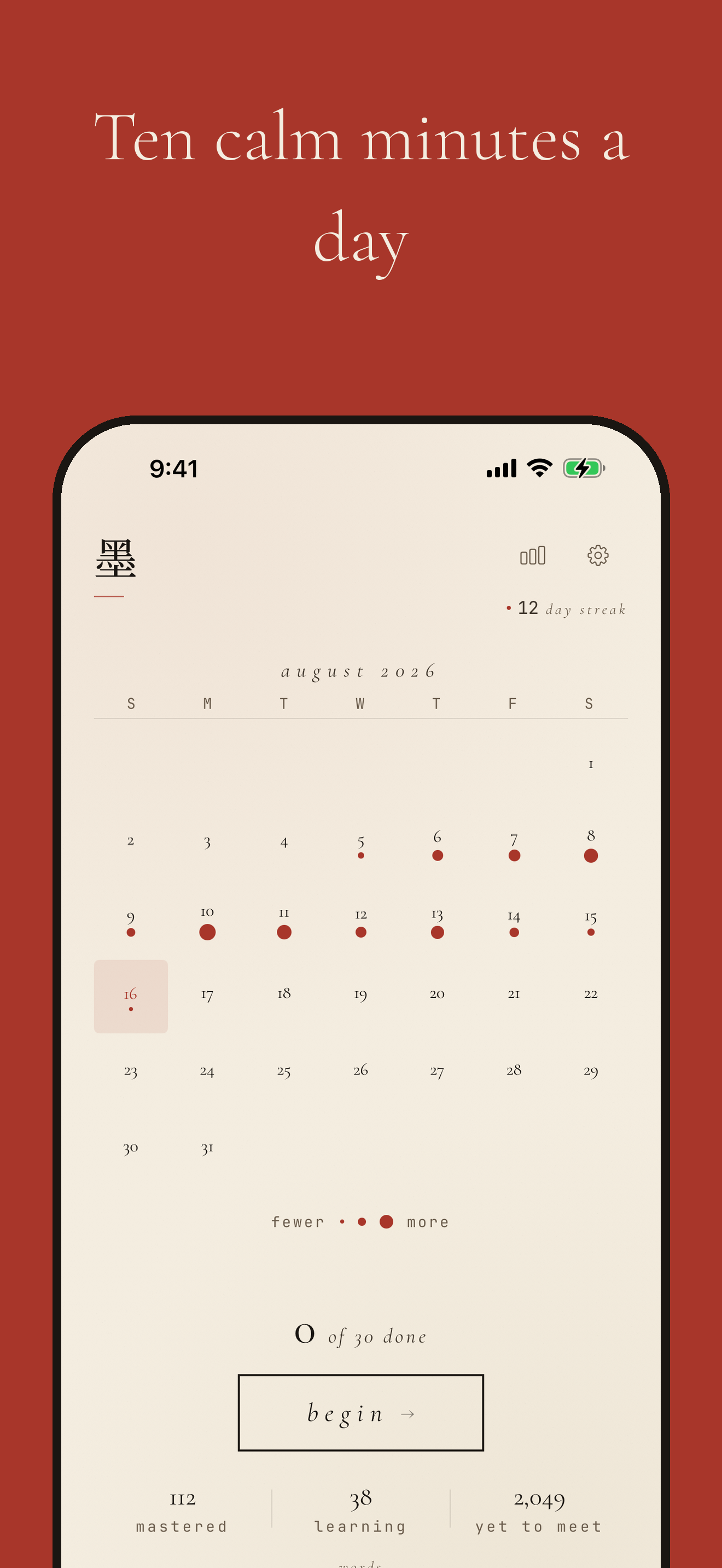
No accounts, no sync, no ads, no streak punishment. Open it, do today's session, close it. Skip a day and the app is exactly the same when you come back. The product opinion is that respecting the user's attention is the feature. Wordbrush is free, in full, on iPhone, iPad, and Android: every word, every card, every recording, in the app the moment it installs.
screenshots
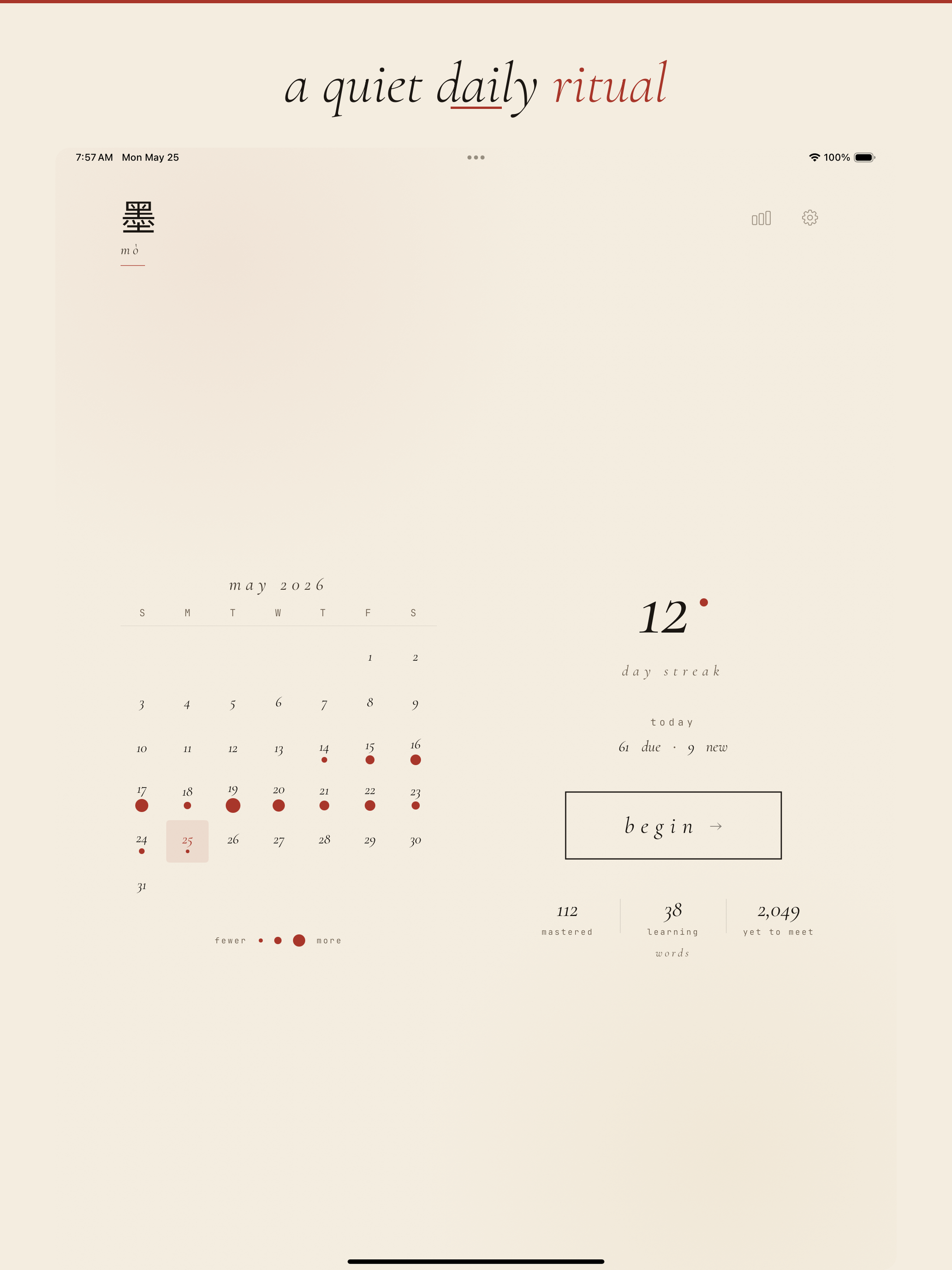
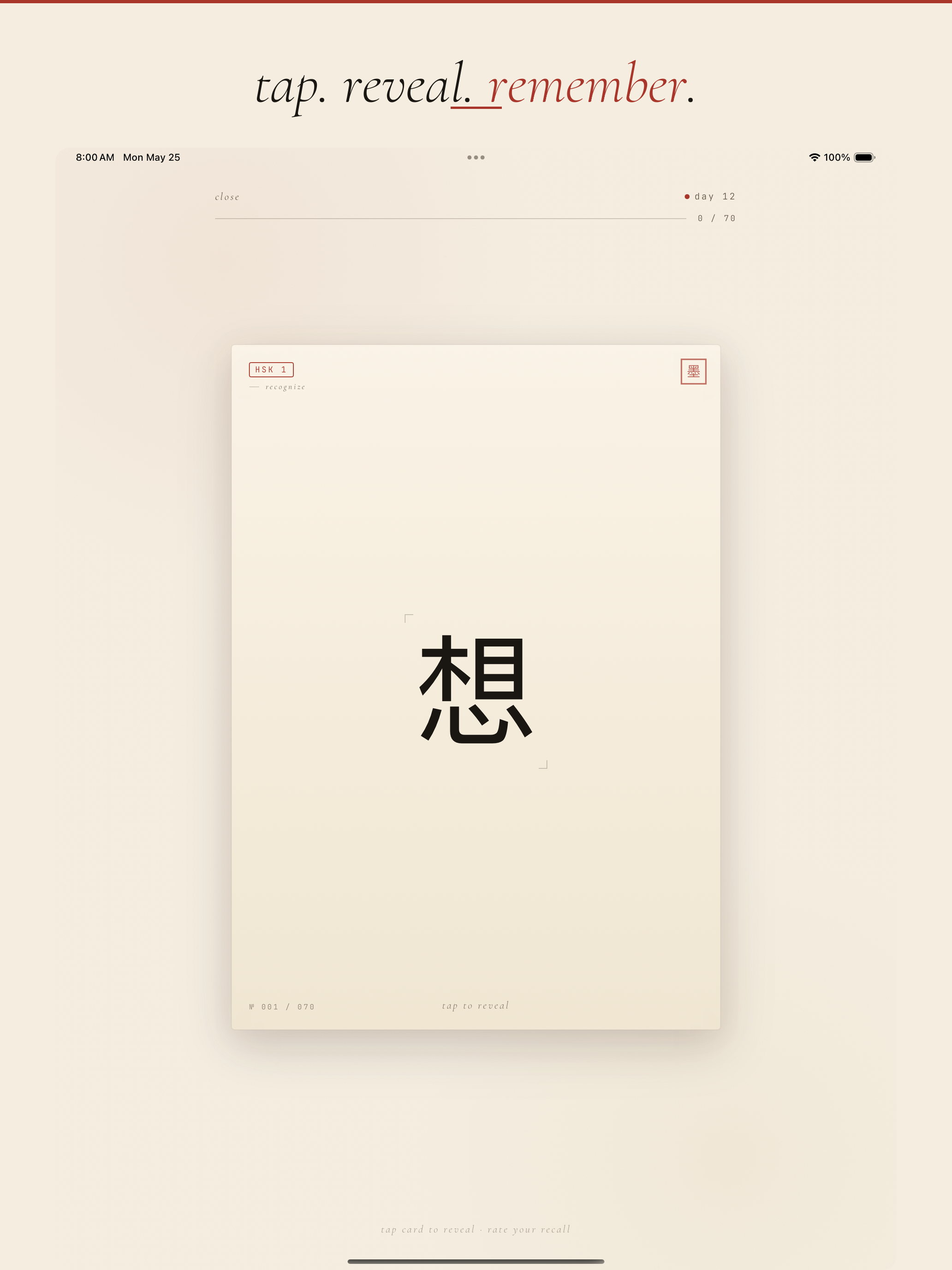
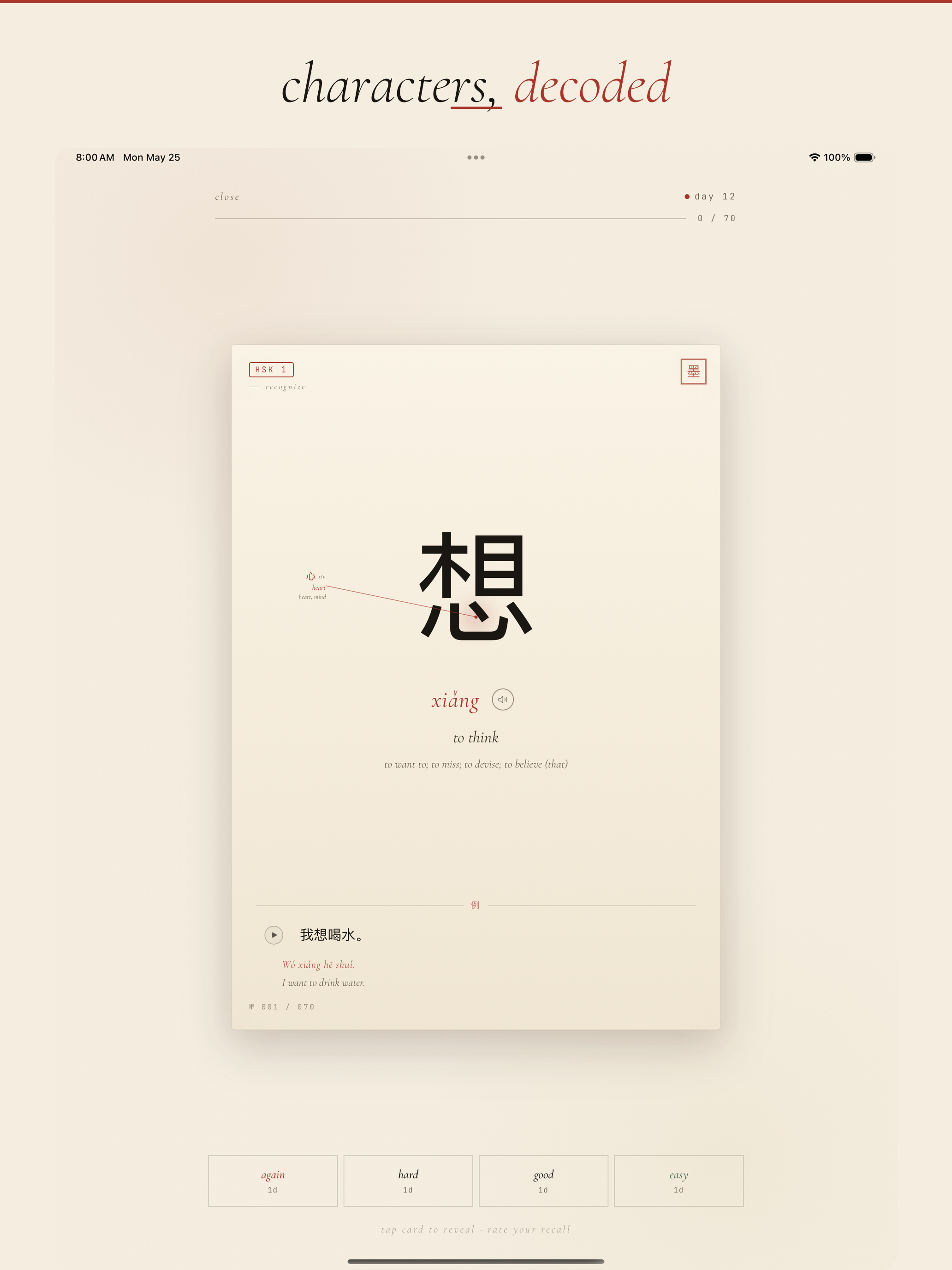
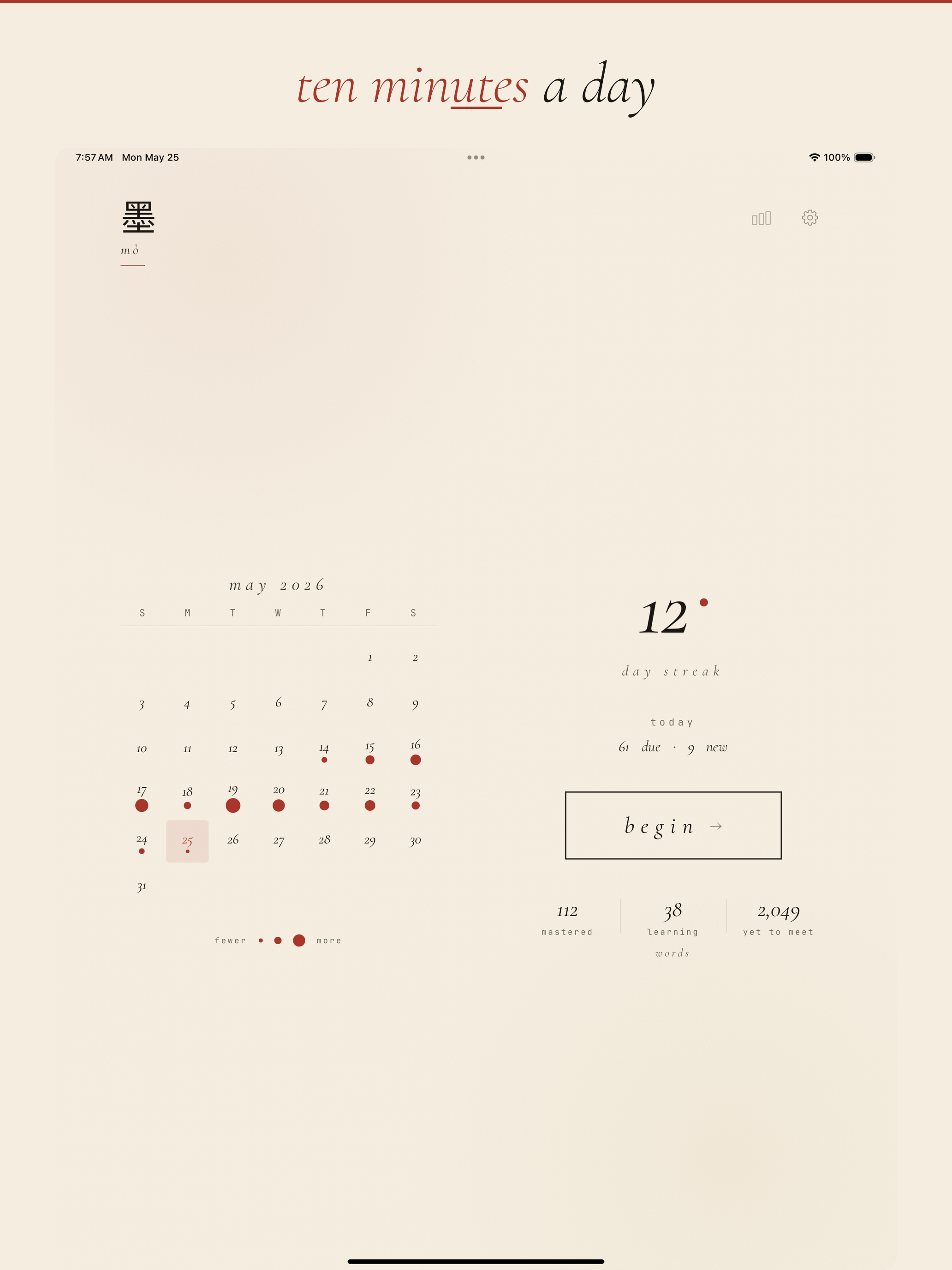
app icon & brand mark

featured-listing hero artwork
the story
Wordbrush began inside Urban Algorithm as a personal tool to drill flashcards on long train commutes through East Asia. The first sketches happened on a journey through Japan; the rest came together over enthusiastic late nights on vacation, then was field-tested during the day in pockets between sightseeing stops.
The product opinion was simple: the popular Chinese learning apps are full of dark patterns. Streak shame. Content gated tier by tier. Premium reminders. The words you actually need locked behind the next paywall. Wordbrush is the deliberate opposite. Every word, all the audio, and every feature are included from the first day, free, in full. There is no account, no advertising, and no server behind the studying. The app gets out of the user's way and lets them work.
The technical bet was that an opinionated, modern stack would let a two-person studio ship something that competes on feature richness with team-built products. Wordbrush is SwiftUI + SwiftData + FSRS on iOS, with a matching Android build, and all 2,199 words and their audio ship inside the binary. There is no content backend; the studying runs entirely on-device, and a session makes no network calls at all.
what it costs
Wordbrush is free, in full. Every one of the 2,199 words, every recording, every sentence, the character breakdowns, the deep dives, and the FSRS schedule are in the app the moment you open it, on iPhone, iPad, and Android. Nothing is locked, there is no tier above it, and there is no account to create.
There are no ads, and no data is sold. There is no "pro" version of the same screen, and no clock running on anything. The words and the audio ship inside the download, and a study session touches no server.
If that ever changes, it will be said here first, and it will not be done by taking away something a user already had.
the studio
Urban Algorithm, LLC is a two-person studio for software that respects its users. Wordbrush is its Chinese vocabulary app; the same studio also makes a workout-routine app (Kangaroo Workout).